
For many years, the energy transition was largely about one objective: producing more renewable electricity.
That remains essential. But as solar and wind become a larger part of the electricity system, a new challenge is emerging. Renewable generation does not necessarily happen when electricity demand is highest.
Solar production peaks during the day. Wind generation depends on weather conditions. Meanwhile, businesses, buildings and industrial facilities have their own consumption patterns.
This is where energy flexibility becomes increasingly important.
What is energy flexibility?
In simple terms, energy flexibility is the ability to adjust when electricity is produced, consumed, stored or supplied to the grid.
Instead of treating electricity consumption as something fixed, flexibility makes energy demand and supply more responsive to market conditions, grid constraints and renewable generation.
A company can become more flexible in several ways:
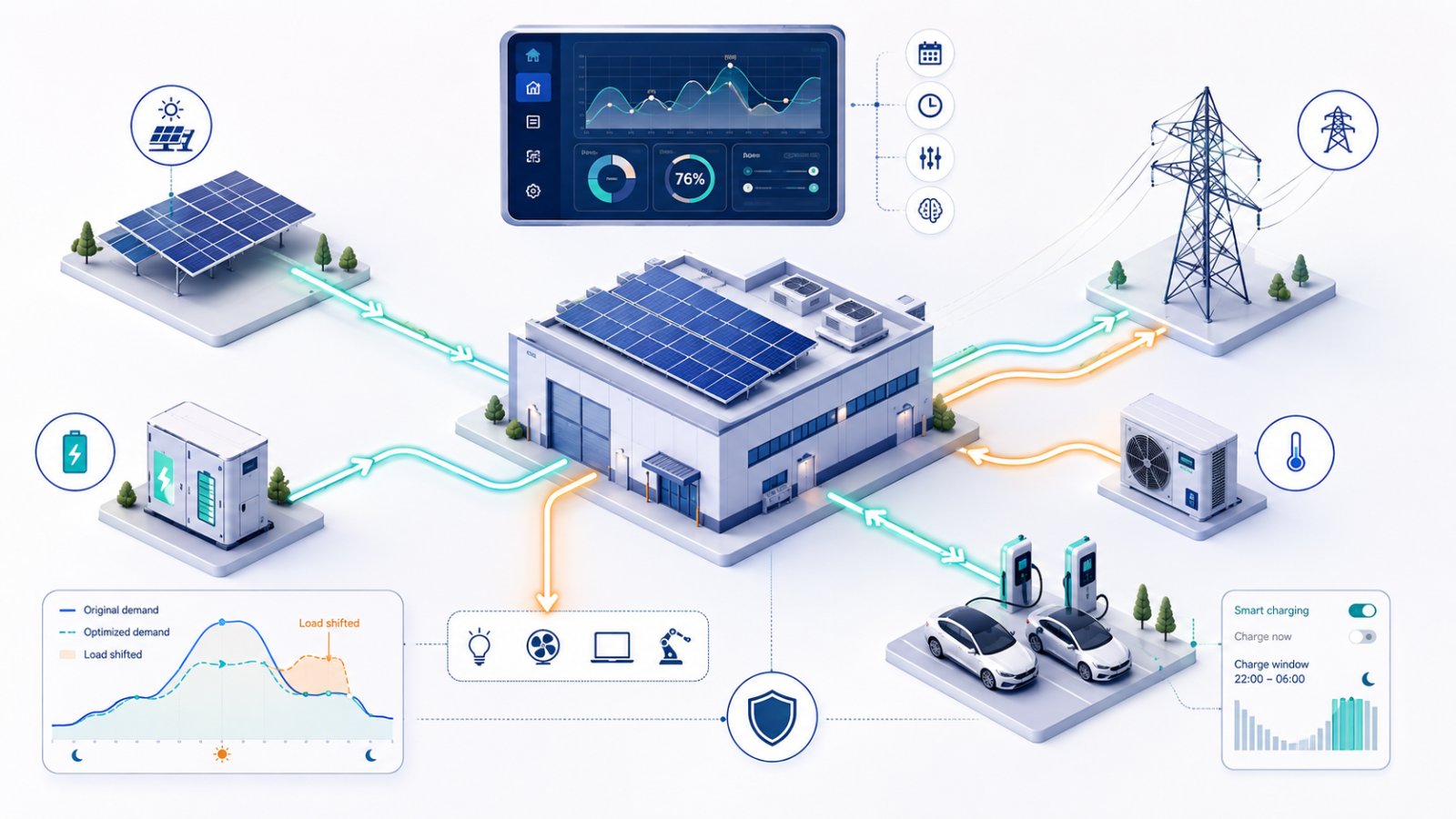
- Battery storage can store electricity when renewable generation is abundant or prices are low and use it later when prices increase.
- Industrial equipment can sometimes shift part of its consumption to periods when electricity is cheaper or more readily available.
- Electric vehicle charging can be scheduled according to electricity prices, renewable production or grid conditions.
- Heating, cooling and other building systems can also be intelligently managed to reduce consumption during expensive or constrained periods.
Combined with on-site renewable generation, these technologies allow companies to actively manage their energy rather than simply consume it.
Why is flexibility becoming more important?
The European electricity system is changing rapidly.
As renewable penetration increases, electricity production becomes more variable. During periods of strong solar or wind generation, electricity supply can exceed demand, contributing to very low or even negative wholesale prices.
At other times, renewable generation may fall while demand remains high, increasing the need for other generation sources and potentially pushing prices upwards.
This creates a paradox: Europe can have more renewable electricity than ever before while simultaneously experiencing greater volatility in electricity markets.
The challenge is therefore no longer simply to generate more renewable energy. It is also to better match energy production with energy consumption. Flexibility helps bridge that gap.
From energy consumption to energy optimisation
For businesses, flexibility changes the way energy should be considered.
Traditionally, companies bought electricity from the grid and treated energy largely as an operational cost. The development of self-consumption changed this model by allowing companies to produce part of their own electricity.
The next step is optimisation.
A company combining solar generation, battery storage, energy efficiency and an energy management system can decide much more intelligently when to consume electricity from the grid, when to use its own production and when to store energy for later use.
In some markets, flexible assets can also participate in grid services, creating additional sources of value.
Energy therefore becomes an asset that can be actively managed.
Why does this matter for competitiveness?
There are three important business implications:
- Lower exposure to electricity price volatility. Companies can shift or reduce consumption during expensive periods and use stored or self-generated electricity instead.
- Higher value from renewable generation. A solar installation produces the greatest economic benefit when its electricity can be consumed or stored rather than exported at periods of low market value.
- Greater resilience. As electricity systems become increasingly electrified and grid constraints become more relevant, the ability to manage consumption and local generation provides companies with greater control over their energy needs.
The next phase of the energy transition
The first phase of the energy transition focused heavily on renewable generation. The next phase will increasingly focus on integration, storage, flexibility and intelligent energy management.
This is also changing the way companies approach energy investments.
At Helexia, we increasingly see solar self-consumption, battery storage, energy efficiency and energy management not as separate technologies, but as parts of the same energy strategy.
The objective is no longer simply to produce renewable electricity. It is to optimise how energy is produced, consumed, stored and managed across the organisation.
Because in an increasingly complex electricity system, the value of energy will depend not only on how much we produce or consume, but also on when we do it.