
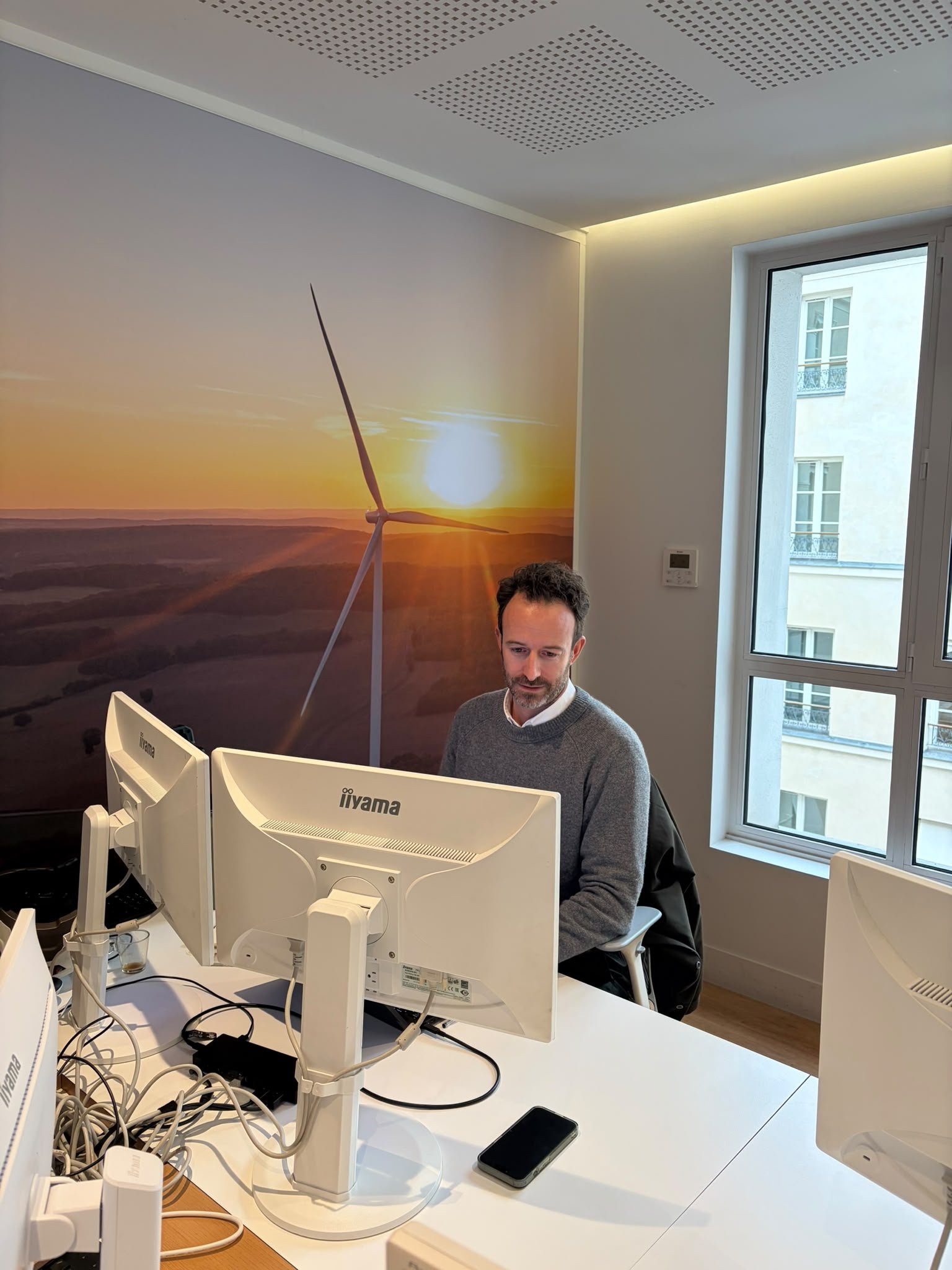
As Head of Asset, Sales, Investment and Funding at Helexia, Fabian Eiglier brings an investment perspective to the energy transition, focusing on how to turn ambition into financially sound, resilient and scalable projects. His view is clear: financing is not simply the final step. It is an essential part of designing projects for long-term success.
What makes an energy transition project truly investable?
A project is truly investable when environmental impact, economic value and risk allocation are aligned. An attractive return is important, but it must be supported by realistic assumptions, a solid contract and the ability to perform over the long term.
What do investors look at first when assessing an energy project?
Investors (and lenders) first look at the predictability and resilience of the project’s cash flows. The quality of the counterparty, the contract and the risk allocation are often as important as the expected return itself.
What has changed most in renewable energy financing over the last decade?
The market has become significantly more mature, but also more complex. Ten years ago, renewable energy financing was often driven by stable support mechanisms and relatively standard project structures. Today, projects operate in a more diverse environment, with corporate PPAs, self-consumption, energy efficiency solutions, storage and increasingly sophisticated combinations of technologies and revenues. At the same time, the sector has had to deal with higher interest rates, inflation, supply-chain pressures and greater volatility in energy prices. As a result, financing is no longer simply about raising debt at the lowest possible cost. It is about designing a resilient structure that protects the project throughout its lifetime. This is a major evolution: financing has moved from being a final step in the process to becoming a core part of project design.
Why is financing becoming increasingly strategic for companies accelerating their energy transition?
Financing determines how quickly a company can turn its climate ambitions into operational projects. The right structure reduces the upfront burden, preserves investment capacity and makes it possible to deploy the transition at scale.
Outside of work, what helps you disconnect and recharge your energy?
Surfing, spending time at the ocean and with my family are what help me recharge. Surfing forces you to be fully present: you observe, adapt and accept that you cannot control everything. It is a useful perspective, both personally and professionally.