
How the collaboration between Helexia and Leroy Merlin across Europe reflects the shift towards a more integrated approach to energy management.
Large retail chains consume significant amounts of energy for lighting, heating and cooling, refrigeration and electric mobility. Alongside pressure on costs, decarbonisation targets are pushing the sector to rethink how energy is produced and used. The challenge is no longer just about generating energy, but also about consuming, storing and managing it in a coordinated way. The collaboration between Helexia and Leroy Merlin reflects this evolution, incorporating solutions tailored to each operation, from photovoltaic generation to energy efficiency, storage and electric mobility.
From generating energy to integrating it into operations
In Spain, the starting point is solar generation. Leroy Merlin’s photovoltaic installations in Palma de Mallorca and Málaga have a combined installed capacity of 632 kWp and generate 744 MWh of renewable energy per year, avoiding approximately 100 tonnes of CO2 annually. These projects transform existing rooftops into assets capable of generating electricity for on-site operations. This model is also being replicated in Romania, with solar generation across 12 stores, including Pallady, with 323 kWp, and in Poland, where the portfolio continues to be developed.
Italy: shifting the focus to efficiency
In Italy, the collaboration is evolving from generating energy to managing it more effectively. Since 2012, Helexia and Leroy Merlin have developed 26 photovoltaic installations, with a combined capacity of more than 9 MW, generating approximately 10 GWh per year and avoiding more than 3,000 tonnes of CO2. The scope goes beyond generation, with energy audits across 10 sites and energy-efficiency measures involving HVAC and lighting systems in eight stores, aimed at reducing energy consumption and optimising operations.
Portugal: expanding the energy ecosystem
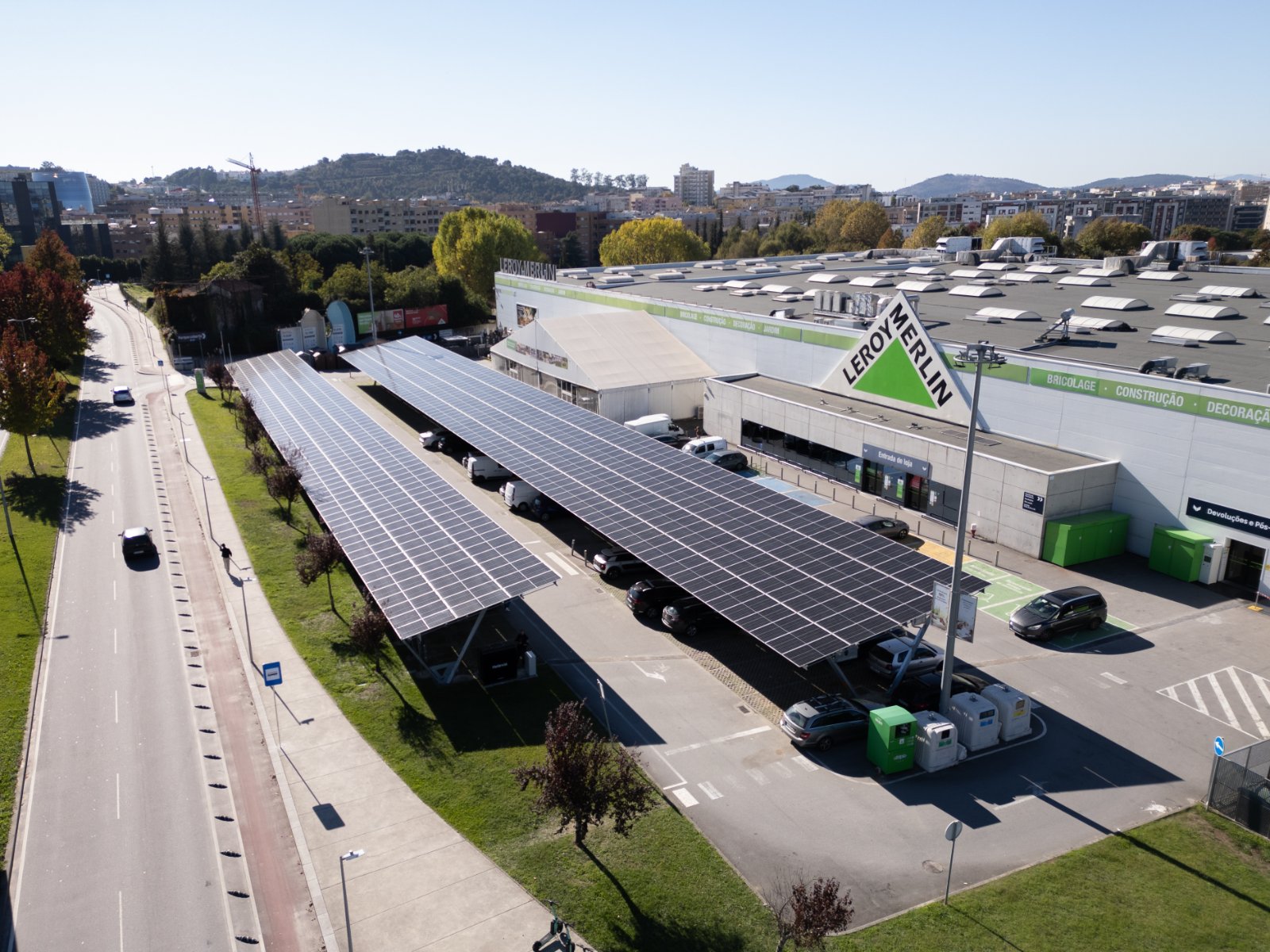
The experience developed with Leroy Merlin in Portugal shows how this strategy can progressively incorporate new solutions. The portfolio includes 14 photovoltaic self-consumption projects, with 5.6 MWp of installed capacity, as well as solar carports, electric vehicle charging points and 13 BREEAM-certified sites. One of the most representative examples of this evolution is Leroy Merlin’s National Distribution Centre, where solar generation is combined with a 1.8 MW battery energy storage system (BESS). The battery makes it possible to shift the use of generated energy to periods of greater need, increasing flexibility and improving the utilisation of renewable energy.
France: the next step
This evolution is continuing in France, where Helexia and Leroy Merlin are developing projects that combine photovoltaic generation with battery energy storage systems. The objective is to integrate both solutions from the project design stage and move towards more flexible energy management.
A strategy adapted to each market
The experience of Helexia and Leroy Merlin demonstrates that the energy transition in retail does not follow a single formula. Each site has different characteristics, consumption patterns and opportunities, meaning that solutions must be adapted to each operation.
“Each market starts from a different point, but the direction is the same: to generate, manage and store energy in an increasingly integrated way. We manage this relationship as an international key account, working across countries to ensure common standards and continue driving innovation and competitiveness,” explains Etienne Le Pargneux, Country Director Spain & Group Head of Development at Helexia.
The next step for retail is not simply to produce more renewable energy, but to integrate it intelligently. Connecting generation, storage, efficiency and mobility makes it possible to transform energy into a strategic asset, improving efficiency, advancing decarbonisation and strengthening operational resilience.