
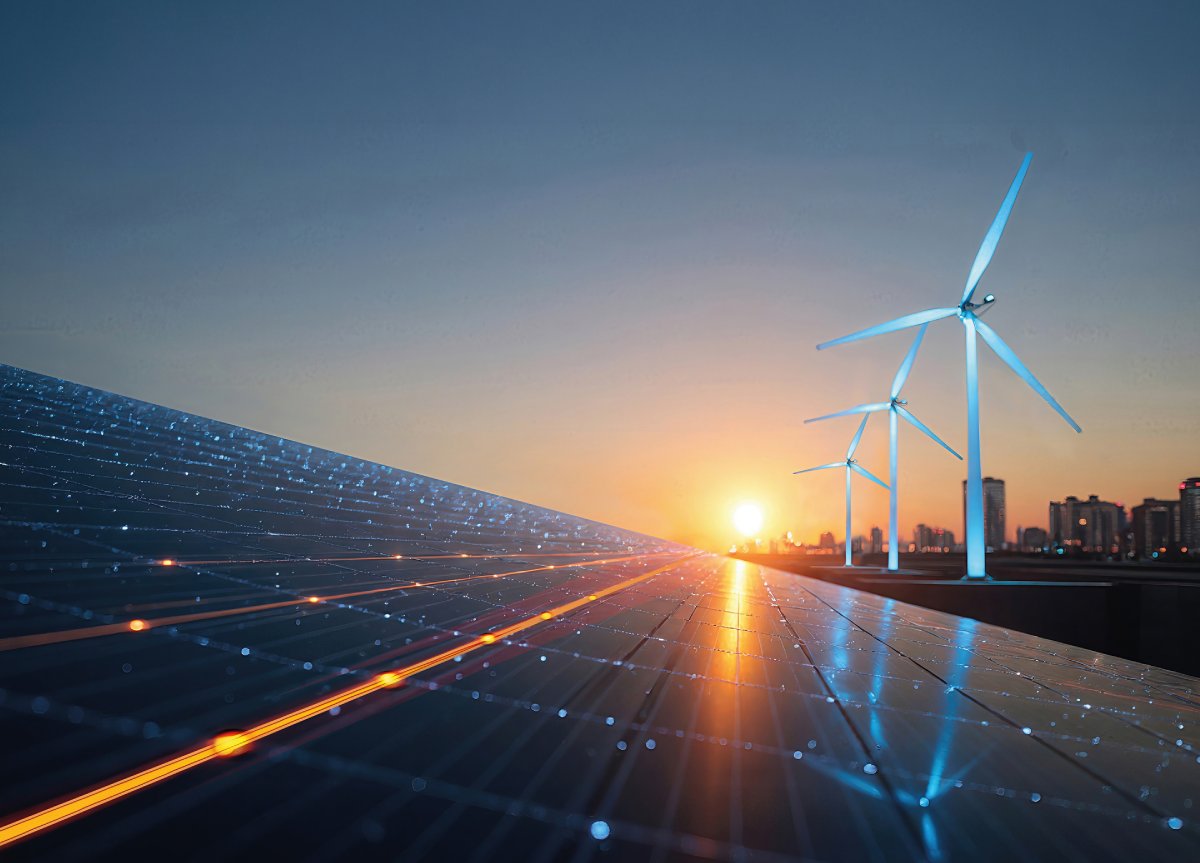
The visit to Intersolar Europe 2026 confirmed an increasingly clear trend: the solar market has entered a new stage of maturity.
For many years, the sector’s evolution was mainly driven by module efficiency, cost reduction and the expansion of installed capacity. These factors remain important, but they are no longer enough to define the competitiveness of energy projects.
Today, value is increasingly created through integration.
Intersolar Europe, held in Munich, once again confirmed its position as one of Europe’s leading exhibitions dedicated to the energy transition, bringing together manufacturers and suppliers across solar, energy storage, electric mobility and energy efficiency. The strong presence of integrated solutions showed that the market is rapidly evolving from standalone products to complete energy ecosystems.
The main conclusion is simple: the future of solar projects will not be only photovoltaic. It will combine solar, storage, intelligent energy management and digital operation.
Storage is no longer optional
One of the clearest trends was the growth of energy storage solutions. Batteries are no longer presented as an add-on to solar projects. They are becoming a core technology to increase the value of renewable energy generation.
This evolution is particularly relevant for companies. A solar plant enables competitive on-site energy generation, but production does not always match peak consumption periods. Storage helps manage this gap, store surplus energy, reduce consumption peaks, increase autonomy and create greater operational flexibility.
The trend observed at Intersolar is clear: leading inverter manufacturers, and increasingly some PV module manufacturers, are now offering their own battery solutions. This shows that the market is moving towards more complete, compatible and easier-to-deploy systems.
More standardised, competitive and faster projects
Another sign of market maturity is the growing standardisation of technical solutions.
In PV modules, the market is becoming more stable, with increasingly standardised formats and power ratings for commercial and utility-scale applications. At the same time, prices remain under downward pressure, reinforcing the competitiveness of solar projects.
In batteries, standardisation is also progressing. Cabinet-type systems, AC-coupled solutions, hybrid architectures, modular systems and containerised solutions are becoming increasingly common. This evolution can reduce engineering effort, simplify installation, improve procurement and make projects more scalable.
For companies such as Helexia, this standardisation represents an opportunity. It allows us to design more efficient solutions, reduce implementation times and improve project competitiveness across different markets.
Energy management moves to the centre
As hardware becomes more mature and standardised, differentiation is shifting elsewhere: intelligent energy management.
Manufacturers are increasingly integrating digital platforms, monitoring systems, Energy Management Systems and associated services. The logic is simple: it is no longer enough to produce energy. It is necessary to know when to produce, when to store, when to consume and how to optimise each decision.
This evolution is particularly relevant in a context where companies are looking to reduce costs, increase predictability and improve energy resilience. The combination of solar, batteries and active energy management transforms energy assets into decision-making tools.
Energy is no longer just installed infrastructure. It becomes a living system, monitored, adjusted and optimised over time.
Artificial intelligence is gaining ground
Artificial intelligence was one of the most visible themes at Intersolar Europe 2026.
Its application in the energy sector is growing in areas such as production forecasting, battery management, predictive maintenance, fault diagnosis, consumption analysis and performance optimisation. This confirms that the next phase of the energy transition will also be digital.
AI can help extract more value from existing assets. It can anticipate deviations, improve operational decisions, identify savings opportunities and increase system reliability. For companies with multiple sites, variable consumption profiles or distributed energy assets, this capability will become increasingly important.
Competitive advantage will no longer depend only on selecting the best equipment. It will also depend on the ability to manage it better.
Safety is becoming a stronger requirement
The visit to Intersolar also showed strong attention to safety, particularly in battery energy storage systems.
As batteries become more common in commercial and industrial projects, requirements from regulators, insurers, customers and operators are also increasing. Prevention, detection and mitigation of risks, especially fire risks, are becoming essential elements in project design.
This means that BESS integration requires technical rigour, updated standards, careful equipment selection and appropriate operation and maintenance procedures.
Safety will not be a technical detail. It will be a condition for trust.
Helexia, our vision
The trends observed in Munich are fully aligned with Helexia’s strategic direction.
The market is moving towards integrated solutions combining solar generation, battery storage, electric mobility, intelligent energy management and, in the future, flexibility and aggregation services. This evolution reinforces Helexia’s role as a partner capable of designing, financing, implementing and operating complete energy solutions for companies.
The focus is no longer only on installing renewable capacity. It is about creating value throughout the entire project lifecycle.
This means strengthening capabilities in BESS, digitalisation, EMS, artificial intelligence, safety, operation and continuous optimisation. It also means looking at each customer in an integrated way: consumption profile, business objectives, exposure to energy prices, operational needs and flexibility potential.
The future will be integrated
Intersolar Europe 2026 confirmed that the photovoltaic sector has entered a new stage. Technology continues to evolve, but differentiation between manufacturers is gradually decreasing. Modules are more efficient, systems are more standardised and costs are becoming more competitive.
The real differentiator will be integration.
Integrating solar with storage.
Integrating production with consumption.
Integrating hardware with software.
Integrating data with operation.
Integrating energy with business strategy.
For companies, this means that energy projects should no longer be assessed only as technical solutions or isolated investments. They should be seen as platforms for competitiveness, resilience and decarbonisation.
The energy transition is no longer only about producing renewable energy. It is increasingly about managing all available energy better.
And that will increasingly define the difference between installing technology and creating value.