
For years, energy was seen by companies as a necessary cost, relevant, but relatively stable. That paradigm has changed. Today, in Europe, energy has become one of the main risk factors for investment and industrial competitiveness.
Recent data from European business associations shows that energy is now one of the top concerns for companies, second only to regulatory burden. The reason is clear: high prices and, increasingly, strong volatility that makes planning and decision-making more complex.
Recent data from European business associations shows that energy is now one of the top concerns for companies, second only to regulatory burden.
and, increasingly, strong volatility that makes planning and decision-making more complex.
A growing competitiveness gap
The cost gap between Europe and other regions is now significant. Industrial electricity prices in the European Union can be two to three times higher than in the United States or China.
This is not just a financial issue, it is a strategic one. It directly affects the ability of European companies to compete globally, influences investment decisions, and can even lead to industrial relocation.
For energy-intensive sectors, the impact is even more pronounced. In some cases, energy costs represent a substantial share of total production costs, making energy efficiency and consumption management critical to long-term viability.
For energy-intensive sectors, the impact is even more pronounced. In some cases, energy costs represent a substantial share of total production costs, making energy efficiency and consumption management critical to long-term viability.
Volatility: the new structural challenge
Beyond price levels, volatility is becoming an equally critical issue.
Europe’s growing reliance on liquefied natural gas (LNG), which is more expensive and exposed to global market dynamics, has increased instability in energy markets. This effect is amplified by the fact that gas still plays a key role in setting electricity prices.
In practice, this means that even companies that do not directly consume gas are affected by its price fluctuations.
The result is a more uncertain environment, where forecasting energy costs over the medium and long term becomes significantly more difficult, a major constraint for investment planning.
Electrification increases exposure
At the same time, Europe is accelerating the electrification of its economy — a necessary step for decarbonisation, but one that increases exposure to electricity price dynamics.
Electricity already represents a growing share of industrial energy consumption, and this trend will intensify in the coming years. Ensuring access to competitive and predictable energy is therefore becoming a key strategic priority.
From risk to opportunity: energy as a strategic lever
In this new context, energy is no longer just an operational variable, it is a strategic lever.
Companies that can:
- reduce their dependence on the grid,
- stabilise their energy costs,
- and optimise their consumption,
gain a clear competitive advantage.
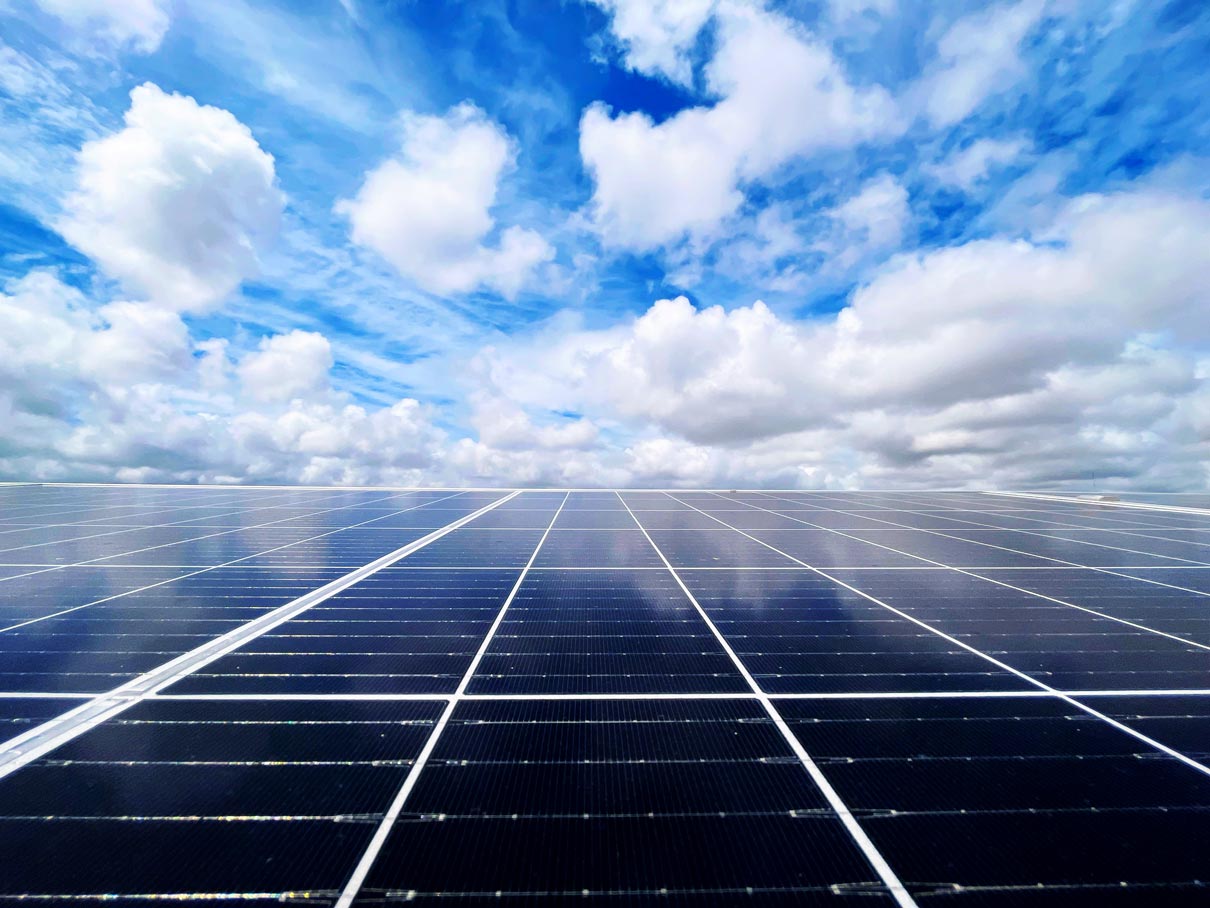
This is where solutions such as on-site solar generation, battery storage systems, smart energy management, and long-term energy contracts become essential.
In this new context, energy is no longer just an operational variable, it is a strategic lever.
The role of Helexia: turning energy into value
At Helexia, we operate precisely at the intersection of energy, competitiveness, and sustainability.
Our approach is to transform energy consumption into a strategic asset for our clients through integrated solutions that combine:
- On-site renewable energy generation, reducing exposure to market price volatility;
- Battery storage systems (BESS), enabling optimisation and flexibility;
- Continuous monitoring and energy management, ensuring ongoing efficiency improvements;
- Flexible investment models, such as Energy-as-a-Service, removing the need for upfront CAPEX.
More than deploying technology, we help companies build a resilient and future-proof energy strategy aligned with today’s market challenges.
Competitiveness and energy transition: two sides of the same equation
The energy transition is often framed as a challenge. But for many companies, it is increasingly becoming a key driver of competitiveness.
In a context of high and volatile energy prices, investing in smart energy solutions is no longer just an environmental decision, it is an economic one.
Energy will remain a central topic in Europe’s agenda in the coming years. The real difference will lie in how companies choose to respond: as passive observers of volatility, or as active players shaping their own energy strategy.
Energy will remain a central topic in Europe’s agenda in the coming years. The real difference will lie in how companies choose to respond: as passive observers of volatility, or as active players shaping their own energy strategy.